the living curriculum

rooted in nature, proven by science — the curriculum every child thrives in
the world is changing faster than any of us expected.
jobs that graduates trained years for are being replaced by artificial intelligence. youth unemployment is rising. and the people running some of the world's most successful organisations are saying the same thing — the young people arriving in their teams cannot think creatively, solve problems or work well together.
we built our schools for a world that no longer exists. the industrial revolution needed obedient workers. sit down, listen, memorise, repeat. and for over a century, that is what schools delivered. but the world that system was designed for is disappearing and we have not yet asked the most important question:
what do children actually need to thrive in the world they are inheriting?
not just to find work — but to live well. to know themselves. to care for others. to grow food, manage money, listen deeply, disagree without causing harm, and feel connected enough to the living world to want to protect it.
the answers to most of the challenges facing humanity already exist. there are innovative alternatives to single use plastics. there are ways of growing food that restore rather than deplete the soil — and with a third of the world's topsoil already lost, food security is not a distant problem. it is arriving now. there are practices that rebuild mental health, reconnect communities and help us live more lightly on this planet. the knowledge is there. what grows the generation of people who will choose to use it is connection — to the living world, to each other, to self and the consequences of their choices.
connection does not grow from a textbook.
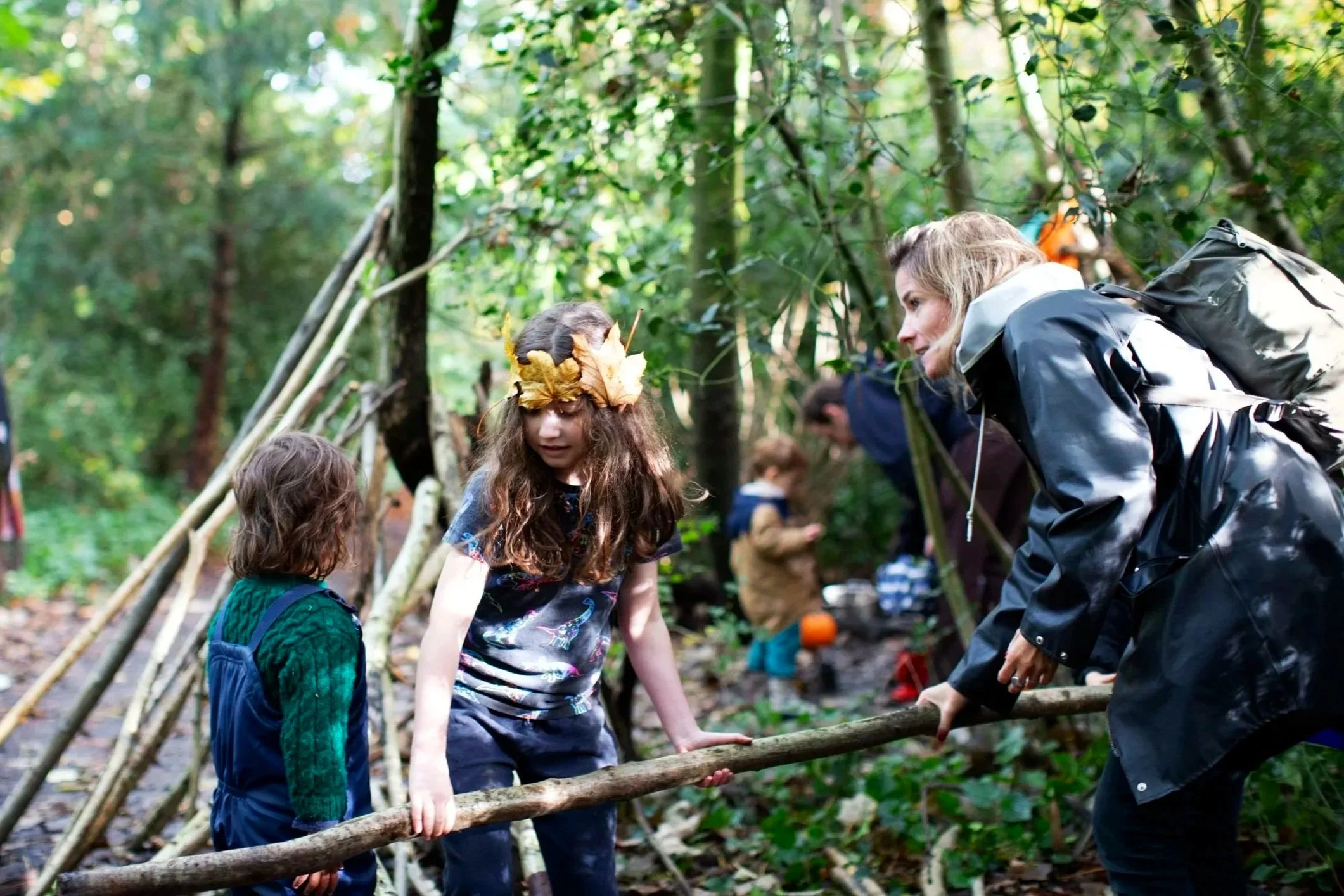
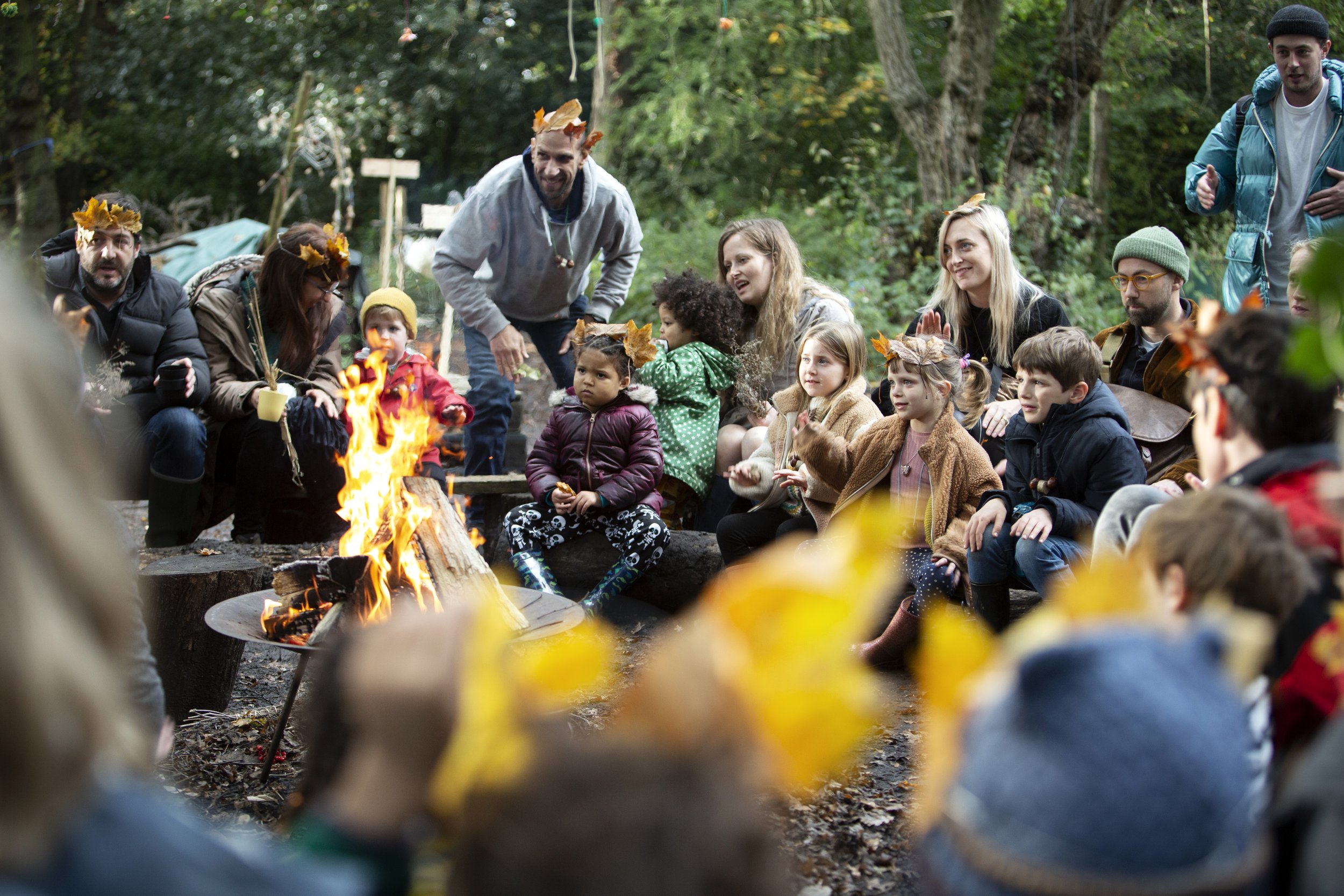
it grows when a group of children agree on a problem worth solving and work together until it is solved. when something they have built with their own hands stands in the world. when a seed they planted becomes food on a plate. when a story told around a fire stays with them for the rest of their lives. learning that lives in the body and heart — through doing, making, growing and creating together — is learning that changes how people act in the world.
science has known this for decades. children need to feel safe and seen before they can learn. play builds the neural pathways that make thinking possible. time in nature reduces stress, restores attention and grows resilience, playing with mud as a young person builds immunity and tending soil releases serotonin. these are not alternative ideas - they are biology and yet they are not yet at the foundation of how we educate our children.
in alternative education and forest schools, this way of learning is already being lived every day. practitioners, play workers, bushcraft leaders, child psychologists, storytellers and permaculture designers are doing this work — skilled, passionate and proven. however, it has not yet found its way into the heart of mainstream education, where most children are.
this is what the living curriculum is here to change.
the window is open but only just
in 2024 the government launched a review of the national curriculum. the report has been published. a revised curriculum is due for first teaching in 2028. and while nature and outdoor learning have made it into the review — they have been placed at the edges, as enrichment, not at the foundation where the science says they belong.
this is not a future opportunity. it is a current and closing one. the decisions about what becomes foundational in every child's education are being made right now. and they will not change without the voices of the people who know what is possible — parents who have seen it, practitioners who have lived it, and communities who will not accept anything less for their children.
that is why this campaign exists. not because government has created this moment — but because we cannot afford to let it pass.
the campaign
on the ground
at the london permaculture festival on 26 july, we are sharing the vision of the living curriculum for the first time publicly. alongside a panel of experts we will make the case for why this change is needed and what it could look like. and then we will ask a simple question — who wants to help make it happen?
we are looking for volunteers to join a think tank — practitioners, educators, systems thinkers, parents, policymakers — to work together to make newham the first pilot. newham is one of london's most diverse boroughs and a place where we have deep roots. together we will map what already works inside mainstream schools and build a shared framework that any school can adopt.
we are using a simple traffic light model to understand where schools are. green schools have already recognised the need — perhaps they run forest school sessions, have a play programme or have found ways to bring nature and play into the day. they are not yet where they need to be, but they are ready and they will become the proof. amber schools are curious but have not yet found a way in — they need support, a framework and the right people alongside them. red schools are where the need is greatest and the barriers highest — and where a shared funded framework would make the most transformative difference.
if we can embed this in newham, we can embed it anywhere. and in a country that exports its education model around the world, that matters.
in policy
the evidence for nature-based education has already been presented in parliament. mental health, food security, race equality, outdoor learning, play, local nature recovery — these conversations are happening in separate rooms with separate briefs. we are writing to every all-party parliamentary group whose work a nature-based curriculum touches, making the case across party lines for a revised curriculum that puts wellbeing at its heart. and we are inviting the nature connection experts who have spent their lives building this knowledge to a round table in parliament — so that the wisdom of the field can be heard directly by the people with the power to act on it.
in wisdom
kin culture was not invented. it was gathered. over a decade we have had a constant thirst to learn — inviting elders and pioneers from the nature connection world to share their wisdom and weaving what we learned into our own practice. we are now taking that same spirit into the campaign — interviewing those elders and leaders, amplifying their voices so that what they know can reach further than ever before. across our field there are brilliant people doing brilliant work. the living curriculum is an invitation to bring that wisdom into community — to become, together, more than the sum of our parts.
join us
this movement starts with people who feel it. if this page has stirred something in you — whether you are a parent, a practitioner, a school, a policymaker or someone who simply knows that something needs to change — we would love you to be part of it.
share this page with someone who needs to read it. tell us your story. bring your skills. invite your school. come to newham.
the solutions exist. the science exists. the practices exist. the workforce exists.
now we need the will. and we believe that starts with you.
sign the petition — https://petition.parliament.uk/petitions/771796/sponsors/new?token=uMH8vEUo33Lx9vqcLR5y#main-content
join the living curriculum community: https://forms.gle/zGq8aLGjLdLUWGkt8
book a call: https://calendly.com/kinshipinnature/30min
support the forest pot: https://www.kinshipinnature.com/forestpot
read our story: https://www.kinshipinnature.com/ourstory
nature for all
we have a vision to grow forest school outside of our own setting and beyond so that more children and adults can benefit from it. witnessing (since our inception in 2017) the essential benefits of connection to the natural world in a very fast moving technological age.
forest pot & shop
it is through our forest pot that kinship in nature strive to ensure our provision is accessible to those who do not have the financial means. our forest pot ensures not only accesibility but sustainability for the future as we know our work in reconnecting people to the natural world is vital for the future of our planet.
we are being supported in both big (for example, with the funding for our forest school leader traineeship) and small ways (for example, through people who support our subsidised places through buying a kin bag or t-shirt through our forest pot shop.
if you are able to support or know someone who is, please consider sharing our endeavour or making a donation through our forest pot here.
donate to our forest pot to support our commitment to offering access for all.
help us empower future trainees, volunteers and facilitators to impact the mental health, wellbeing and nature connection of our growing communities!